
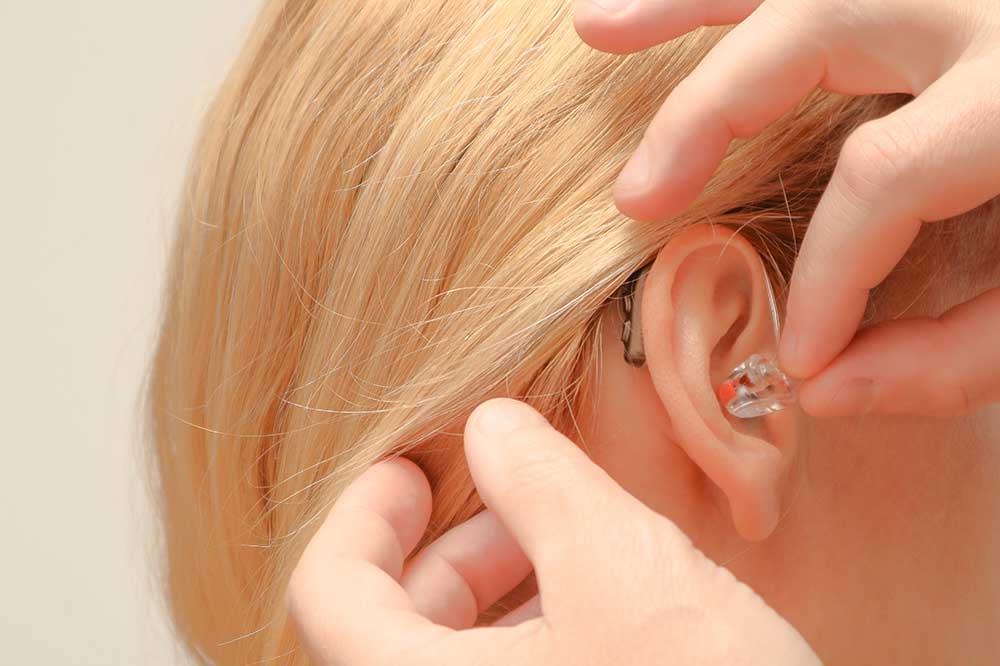
Plenty of myths follow hearing aids around. Some people assume they’ll stop hearing loss in its tracks, and others hold off on wearing them because they fear the devices will make their hearing worse. At Illini Hearing, board-certified hearing instrument specialist Andy Bierbaum, BC-HIS, and hearing instrument specialist Ashley Macdonald, HIS, can test your hearing, talk through the changes you’ve noticed, and help you understand what hearing aids can and cannot do. Hearing aids can’t reverse hearing loss, but they can amplify sound so you hear more clearly.
Why Can’t Hearing Aids Repair the Inner Ear’s Hair Cells?
Hearing aids can’t repair the inner ear’s hair cells because once these tiny cells are damaged or lost, they do not regenerate, so this type of hearing loss is usually permanent. What hearing aids can do is make sounds easier to hear and help you communicate more comfortably.
Sound travels through the outer and middle ear to the cochlea, a snail-shaped structure in the inner ear. Thousands of hair cells inside the cochlea convert sound vibrations into electrical signals, which travel along the auditory nerve to the brain.
Hair cells can be damaged by:
- Natural aging
- Exposure to loud noise over time or from a single loud event
- Genetic factors
Some hearing problems, such as earwax blockage or certain middle ear conditions, may be treatable. A hearing test helps identify the type and degree of hearing loss so you can explore the most appropriate options.
Will Hearing Aids Stop Hearing Loss From Getting Worse?
Hearing aids generally do not stop hearing loss from getting worse or slow its physical progression, but they may help preserve the brain’s ability to understand speech by keeping the auditory system active and engaged.
When hearing loss goes untreated, the brain receives less sound information over time. This reduced stimulation, known as auditory deprivation, can make the brain areas responsible for processing sound less active. As a result, speech may become increasingly difficult to understand, even once you begin wearing hearing aids.
Consistently wearing properly fitted hearing aids provides the brain with the regular sound input it needs to process. This helps maintain speech understanding, which is often more important than simply making sounds louder. Because many people wait years after noticing hearing difficulties to seek care, an earlier hearing test can make a meaningful difference.
How Do Hearing Aids Sharpen Speech in Everyday Conversations?
Hearing aids sharpen speech in everyday conversations by amplifying the specific frequencies you have difficulty hearing. Rather than making every sound louder, modern digital hearing aids are programmed to match each client’s hearing loss, listening needs, and surroundings.
Many speech sounds, particularly consonants such as “s,” “f,” and “th,” fall in higher frequencies that are often the first affected by hearing loss. When these sounds are difficult to hear, words can blend together or seem mumbled. By restoring access to these sounds, hearing aids help make speech clearer and easier to follow.
Many hearing aids also include features designed to support communication, such as:
- Noise reduction to help in busy environments
- Speech enhancement to emphasize voices
- Feedback suppression to reduce whistling
- Automatic adjustments as listening environments change
Hearing aids cannot eliminate all background noise, and some hearing difficulty may remain. Adjusting to amplified sound also takes time. Wearing your hearing aids consistently and sharing feedback with your hearing instrument specialist helps you get the most benefit from your devices.
Why Would Hearing Loss Progress While You Wear Hearing Aids?
Hearing loss that progresses while you wear properly fitted hearing aids is most likely following its natural course, not reacting to the devices themselves. Correctly fitted and programmed hearing aids are designed to support hearing, not damage it.
Some people notice that sounds seem quieter or more distant when they remove their hearing aids. This happens because the brain becomes accustomed to clearer, amplified sound. It does not necessarily mean hearing has worsened, but any noticeable change should be evaluated.
Hearing aids include maximum output limits to keep amplification safe. Problems may occur when devices are too loud, poorly programmed, or not designed for your hearing loss. You should never wear hearing aids that belong to someone else. Distorted, uncomfortable, or overly loud sounds may indicate a need for adjustment.
Schedule a follow-up appointment if you notice:
- More difficulty understanding conversations
- Sounds that seem distorted or uncomfortable
- Frequent volume increases to hear clearly
- Changes in hearing in one ear
An updated hearing test can confirm whether your hearing has changed. In many cases, Andy Bierbaum or Ashley Macdonald can reprogram your existing hearing aids to address new hearing needs.
How Do You Settle on the Right Hearing Aid Style and Features?
You can settle on the right hearing aid style and features with help from our hearing instrument specialists, who start by testing your hearing, discussing your communication needs and lifestyle, recommending appropriate devices, and programming them for your specific hearing loss.
Everything starts with a comprehensive hearing test to determine the type and degree of hearing loss. From there, the conversation may include where you have the most difficulty hearing, how active your lifestyle is, and which features may be most useful.
Hearing aids vary in size, style, features, and price, including behind-the-ear, in-the-ear, and in-the-canal designs. At your hearing aid fitting, Andy and Ashley can explain each option and help you choose a device that fits your hearing needs, comfort, and budget.
See Illini Hearing in Champaign or Mahomet About Hearing Aids
If hearing changes are making conversations more difficult, a consultation with Andy Bierbaum or Ashley Macdonald can help you sort out your next step. A hearing test can clarify what is behind your hearing difficulties and help determine whether hearing aids or a referral to a physician is the right path.
Call our Champaign office at 217-434-4141 or our Mahomet office at 217-600-2589, or contact Illini Hearing to schedule an appointment.