
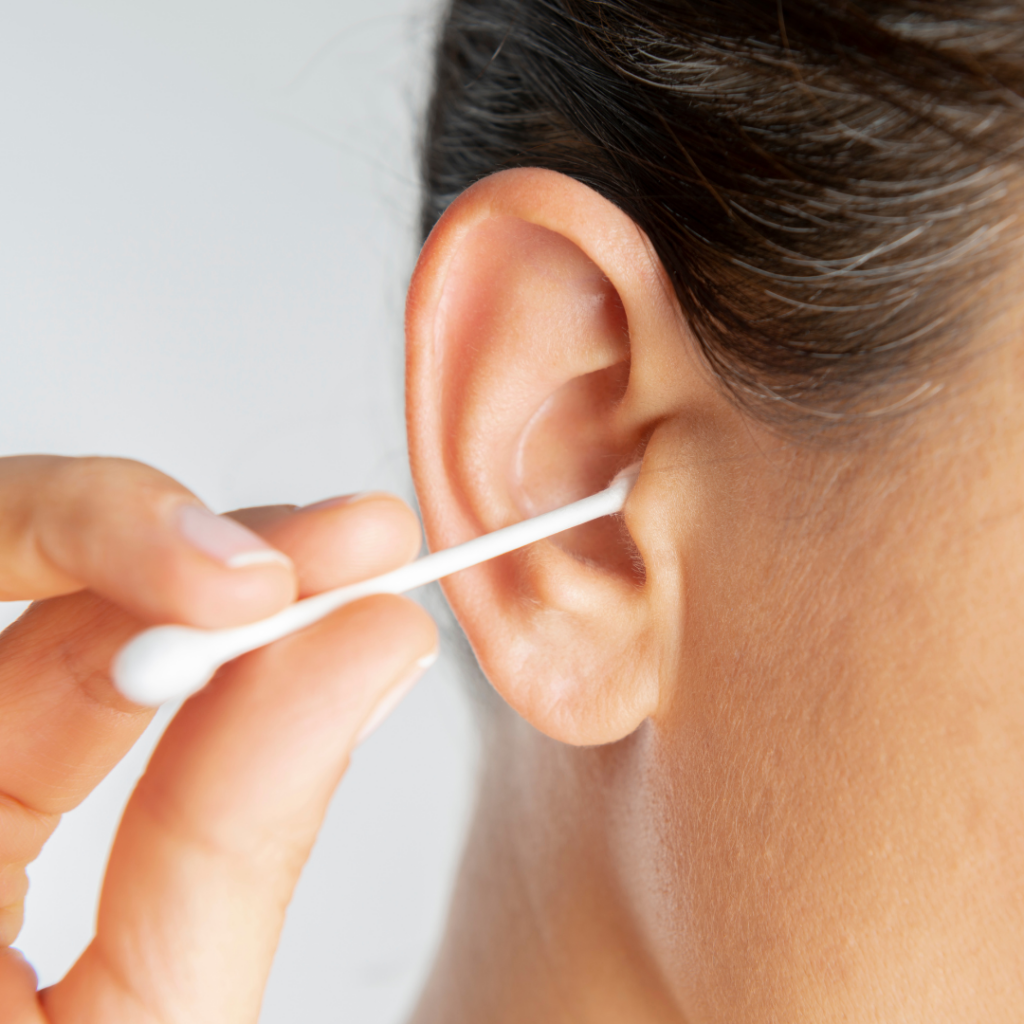
While cotton buds look like simple cleaning instruments, inserting them directly into your ear canal complicates hygiene and can injure sensitive structures. We perform thorough examinations to verify if earwax removal is necessary and select appropriate procedures for your ear condition. Healthy ears rarely require aggressive manual intervention; nevertheless, when blockage develops, we assist patients in safely extracting excess cerumen.
The Hidden Dangers of Cleaning Ears with Q-Tips
Natural earwax, medically termed cerumen, does not represent bodily dirt. Cerumen collects particulate matter, inhibits microbial proliferation, moisturizes the epithelial lining, and shields sensitive canal tissues. Routine chewing and epithelial cell migration continuously transport spent wax toward the concha, where it falls out or clears during bathing.
A Q-Tip placed inside the canal can disrupt this self-cleaning process. Even if the swab gathers a trace of surface cerumen, it routinely compacts the remaining mass against the eardrum. Habitual use tends to compress wax into a stubborn plug, producing an uncomfortable blocked feeling that prompts further harmful scrubbing.
Swabs can be safely applied along the outer ear cartilage, but they should never be inserted past the canal aperture.
Types of Ear Injuries Caused by Cotton Swabs
The epithelial surface inside the ear canal remains exceptionally fragile and easily abraded. Microscopic tears cause acute discomfort or hemorrhage while exposing tissue to bacteria, which heightens the probability of an outer ear infection. Furthermore, the cotton fibers may separate from the stick, leaving a foreign body lodged within the canal.
Possible injuries include:
- Cerumen forced into dense canal impaction
- Cutaneous tearing, swelling, canal inflammation, or bleeding
- Bacterial or fungal ear canal infection
- Foreign matter or cotton material lodged in the ear
- Traumatic perforation of the eardrum
- Mechanical trauma to the middle-ear ossicles behind the eardrum
- Transient or irreversible shifts in hearing thresholds
- Distressing tinnitus, secondary dizziness, or debilitating ear pain
Serious injuries are uncommon, but they can happen if someone bumps the user’s arm, the swab slips, or it is inserted too far.
Establishing Safe Intervals for Earwax Extraction
The majority of individuals do not require routine or scheduled cerumen extraction. Normal ears migrate cerumen toward the opening constantly, allowing routine bathing to cleanse the visible exterior. Frequent overcleaning creates dry, irritated canal surfaces while amplifying the risk of severe impaction or microbial invasion.
Extraction is medically indicated when cerumen fully occludes the lumen, blocks visual examination of the eardrum, compromises hearing aid function, or induces pain.
How to Address Earwax Safely at Home
If earwax produces no discomfort or auditory decline, leaving it undisturbed is consistently the safest choice. Use a damp, soft cloth to clean only the exterior ear structures, allowing the inner canal to maintain itself.
If cerumen requires softening, we might suggest an over-the-counter preparation or ear drops formulated with carbamide peroxide, mineral oil, saline, or glycerin. Ensure you use the exact recommended volume and follow the labeled duration instructions carefully. Immediately halt applications if the medication triggers pain, profound dizziness, skin irritation, or deteriorating symptoms.
At-home ear irrigation is not universally safe and requires clinical clearance and technique demonstration from an audiology professional beforehand. Never use a dental water jet. Steer clear of dangerous tools such as ear candles, metal curettes, lighted camera tools, bobby pins, and home vacuum devices. These products may burn, cut, puncture, or push wax farther inward.
When Is Professional Earwax Extraction Necessary?
You should book a clinical appointment if your ear feels blocked following softening drops, cerumen is deeply wedged, or home methods fail to work. Professional removal is also preferable when a person cannot safely hold still, has a narrow ear canal, uses hearing aids, or has medical or surgical factors that make drops or irrigation risky.
You should seek professional assessment for:
- Acute otalgia, unrelenting canal pruritus, or physical tenderness
- Visible blood, purulent discharge, clear fluid drainage, or offensive ear odors
- Pyrexia or localized tissue swelling surrounding the ear canal
- Newly developing ringing in the ears or balance disturbances
- Hearing loss that starts abruptly or fails to resolve following wax removal
- Concern regarding a perforated eardrum or foreign cotton debris
- Chronic cerumen impactions that clog or disrupt hearing aids
A sudden reduction in one ear’s hearing demands emergency evaluation rather than an assumption of wax blockage. Early hearing testing easily separates a physical wax impaction from a critical inner ear condition.
Clinical Methods for Safe Earwax Extraction
First, we inspect the auditory canal under otoscopic or microscopic visualization to confirm wax occlusion and rule out infections, tissue trauma, or eardrum perforations. The safest removal method depends on wax consistency, canal anatomy, medical history, previous surgery, and the patient’s ability to tolerate the procedure.
Professional options include:
- Wax-softening drops before or during the appointment
- Controlled ear flushing using warm, body-temperature water on intact eardrums
- Low-pressure manual suction under direct high-magnification lighting
- Manual removal with a loop, curette, or small forceps
Operating under direct magnification allows the clinician to avoid sensitive canal walls and halt instantly if the patient experiences pain. Combining multiple extraction techniques is sometimes required for stubborn, dehydrated, or densely consolidated cerumen. After clearance, we conduct a follow-up visualization to ensure the canal walls and tympanic membrane show no complications. Should sensations of fullness, tinnitus, balance issues, or hearing loss persist, comprehensive diagnostic testing will isolate the true underlying etiology.
Request an Appointment for Clinical Earwax Removal
If your ear feels occluded or your hearing acuity drops, book a professional consultation with our team rather than using a Q-Tip. Your clinical visit will cover a comprehensive review of symptoms, otologic surgical history, hearing aid utilization, home care efforts, and metabolic contributors to wax buildup. Contact our office directly to book your safe cerumen-removal appointment.