
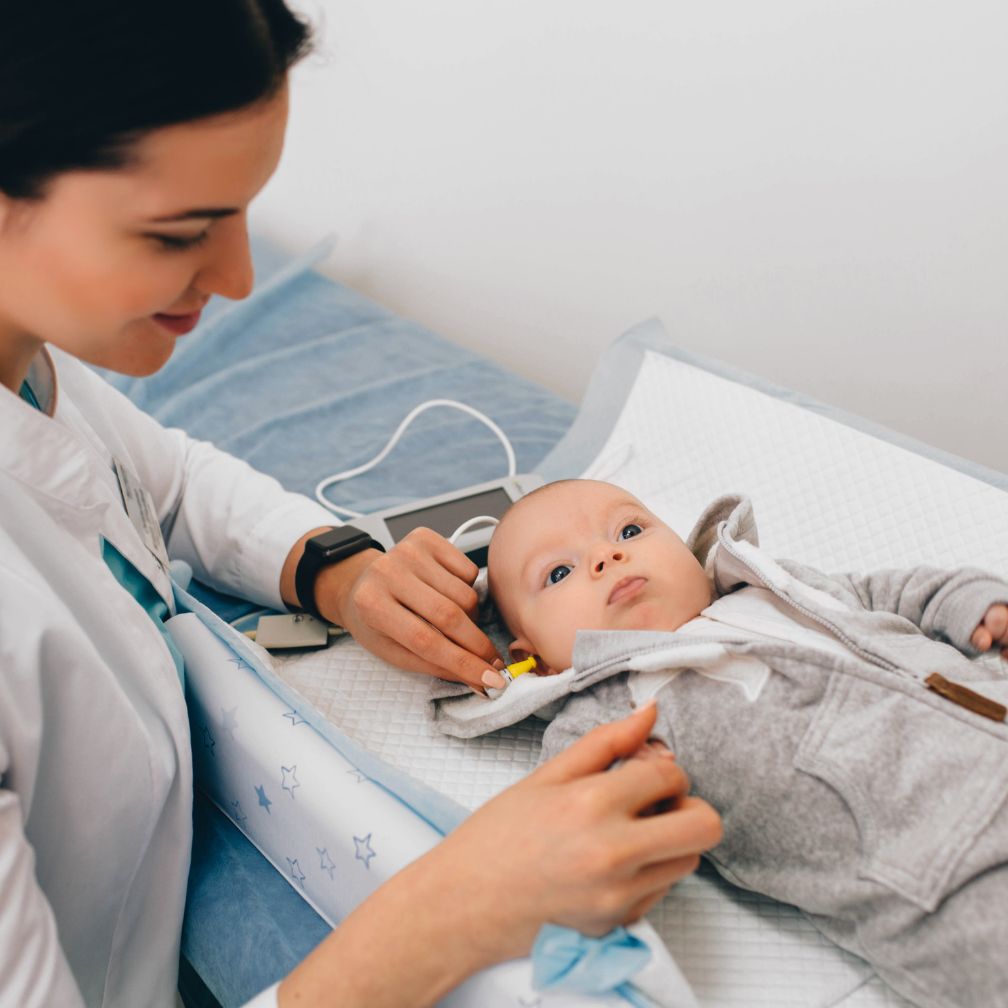
For parents of a newborn, understanding that their baby exhibits auditory deficits tends to spark heavy emotional dread. Fortunately, through prompt detection and medical intervention, young children with hearing deficits can genuinely flourish remarkably. Remarkably, such young children can gain verbal communication, social capabilities, and meaningful connections across their environment, attaining a truly rich existence!
Two of the premier clinical instruments for helping infants with hearing loss include custom hearing aids and cochlear implants. Within this detailed breakdown, we assess their core operations and outline how to select the right device for your child.
Understanding Infant Hearing Loss
Hearing impairment across infants can result from broad health factors, such as:
- Genetic factors (even in the absence of a family history)
- Documented prenatal viral exposures like cytomegalovirus (CMV) or rubella strains
- Complex intrapartum events, such as fetal oxygen deprivation or early delivery
- Specific medications deployed in modern neonatal intensive care units
What remains the single most critical task? Swift clinical diagnosis. For this reason, infants in the United States are screened for auditory challenges prior to hospital discharge. Board-certified pediatric audiologists active execute the recognized “1-3-6” care benchmark:
- Baseline screening performed before 1 month of life
- Fully diagnosed prior to 3 months
- Medical intervention (incorporating corrective units or speech habilitation) commenced inside 180 days post-birth
Achieving these diagnostic benchmarks provides babies a strong foundation for healthy speech, language, and cognitive growth. When you need advice on these early screenings, your pediatrician will gladly advise you!
Hearing Aids for Infants
When supporting infants with mild to severe hearing loss, wearable hearing aids routinely serve as the first line of treatment. These compact, customized units amplify acoustic signals, aiding babies in discerning human speech and ambient sounds more accurately.
Pediatric-grade hearing devices prove to be:
- Safe for newborn infants only a few weeks after birth
- Crafted with cushioned, comfortable ear molds that adapt as the infant matures
- Designed with locking battery compartments and specialized safety features geared toward babies
- Expertly tuned by a licensed pediatric audiologist to accommodate your child’s specific hearing levels
While your infant develops, hearing aids necessitate regular clinical recalibrations to guarantee physical comfort and optimal performance.
Pediatric Cochlear Implants: An Advanced Solution
In cases where a child exhibits profound to severe sensorineural hearing impairment and derives limited success from conventional hearing aids, a cochlear implant may be recommended. In direct contrast to standard hearing aids, cochlear implants:
- Require placement through a routine surgical procedure within the patient’s inner ear
- Route directly past damaged cells inside the inner ear
- Process acoustic energy into clear electrical signals that excite the acoustic nerve pathways directly
Specialized pediatric cochlear implants act as:
- Formally FDA-sanctioned for application in babies starting at 9-12 months of age
- Maximally beneficial when combined with early auditory-verbal therapy and consistent family involvement
- Cleared strictly after thorough diagnostic testing by a pediatric audiology clinician and an ENT physician
This process includes diagnostic imaging, specialized auditory testing, and conversations about long-term expectations and outcomes.
Hearing Aids Versus Cochlear Implants: A Direct Comparison
- Mild to severe hearing challenges suit Hearing Aids; Severe to profound hearing loss: Cochlear Implants
- Non-Invasive acoustic positioning: Hearing Aids; Invasive surgical installation: Cochlear Implants
- Standard sound amplification logic: Hearing Aids; Electrical signal stimulation conversion: Cochlear Implants
- Treatment starts in newborn infancy: Hearing Aids; Starts at 9-12 Months: Cochlear Implants
Hearing Aids vs. Cochlear Implants: Final Thoughts
When your child is diagnosed with auditory deficits, rest assured that clear options and dedicated care teams are available. By partnering with skilled pediatric auditory specialists, countless infants successfully cultivate speech and language milestones fully matching their playmates.
Irrespective of whether your child receives fitting for hearing aids or surgery for cochlear devices, early management delivers permanent lifelong benefits.
Do you need professional advice regarding your baby’s current hearing health? Reach out to our specialists today to schedule a thorough assessment and individualized management strategy.