
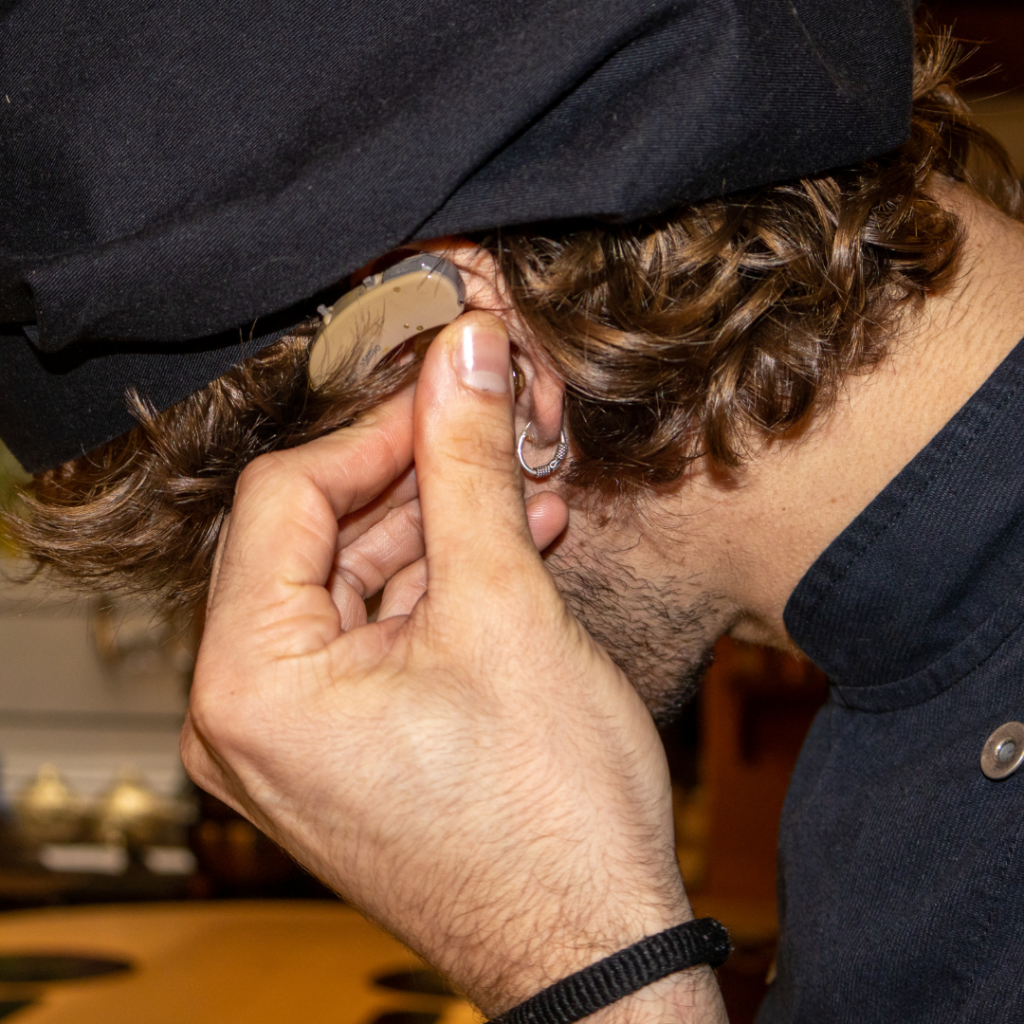
Following dinner conversations becomes challenging when high ambient noise interferes with your focus and hearing. Our practice can evaluate hearing in both quiet and noisy conditions to identify what makes these environments difficult. As soon as we identify the physiological cause of your difficult hearing, we deliver personalized rehabilitation options.
How Can Hearing Seem Normal at Home but Fail in a Restaurant?
A tranquil environment produces a beneficial signal-to-noise ratio where spoken dialogue easily overpowers weak ambient noise. Dining venues establish an entirely contrary auditory challenge. Competing conversations, background music, tableware clatter, and acoustic reflections clash with incoming speech, making auditory processing exceptionally strenuous.
Such listening challenges typically stem from high-frequency hearing loss, auditory-processing deficits, or accumulated noise-induced trauma. Dim lighting, physical tiredness, conversational distance, and divided attention exacerbate these listening deficits. Some patients pass standard pure-tone evaluations with normal scores yet exhibit substantial impairment during specialized speech-in-noise testing. Disproportionate difficulty in restaurants justifies professional clinical assessment even if your everyday home hearing appears intact.
Clinical Evaluation of High-Frequency Hearing Loss
We begin by reviewing your history of communication difficulties, prior noise exposures, ringing or tinnitus, pharmaceuticals, and unilateral symptoms.
Diagnostic pure-tone audiometry establishes the softest auditory thresholds you can perceive across standardized frequencies via air and bone conduction pathways. High-frequency loss often creates an audiogram pattern in which thresholds become poorer as pitches rise. Supplementary assessments routinely include diagnostic tympanometry to analyze middle-ear status alongside word-recognition testing to determine speech clarity.
Since sound-treated booths cannot replicate the chaos of a crowded dining room, speech-in-noise testing provides critical real-world insight. This procedure gauges speech-discrimination accuracy while competing multi-source noise becomes incrementally louder. Interpreted together, these clinical scores demonstrate whether listening struggles originate from loss of audibility, speech clarity deficits, auditory processing delays, or combined elements.
The Role of Central Auditory Processing Disorders in Adults
Auditory processing disorders interfere with the brain’s ability to process and decipher acoustic signals arriving from the ears. A patient’s ears may demonstrate normal pure-tone sensitivity, but their central processing system struggles to separate background babble, distinguish consonant sounds, or follow swift discussions. We first rule out peripheral sensorineural deficits before deciding whether a dedicated auditory-processing test protocol or specialist referral is indicated.
Actionable Listening Tips for Noisy Social Settings
Strategic behavioral modifications can substantially improve the auditory signal reaching your ears while maximizing supportive visual cues. When planning to dine out, select restaurants with calmer atmospheres or arrange reservations during off-peak hours. Facilities equipped with upholstered booths, acoustic baffles, fabric curtains, carpeted floors, and soft materials prove far easier on hearing than minimalist, hard-tiled spaces.
At the restaurant:
- Ask for seating positioned far away from open kitchens, noisy bar areas, ceiling speakers, and large parties.
- Sit with your back near a wall to reduce noise coming from behind you.
- Position yourself to directly face companions under bright lighting to enhance facial comprehension.
- Sit as close to the speaker as comfort permits to preserve speech volume and clarity.
- Place your better-hearing ear toward the person you most want to hear.
- Prompt companions to rephrase unclear sentences with alternate terminology instead of repeating identical words.
- Actively confirm key information rather than smiling and guessing at ambiguous dialogue.
- Take brief listening rests outside or in quiet hallways when mental fatigue emerges.
- Encourage friends to enunciate clearly while maintaining an even, normal conversational tempo.
- Shouting creates acoustic distortion that actively compromises speech understanding rather than helping.
Assistive Hearing Tools and Technology for Complex Acoustic Environments
The best technology depends on the cause of the difficulty, the listening environment, and whether hearing loss is present. Modern clinical hearing aids integrate directional microphone polar patterns, automated digital noise suppression, and personalized restaurant memory settings to highlight frontal speech and reduce background competition. Realistic expectations are vital, since even advanced hearing devices cannot completely erase background conversational chatter.
Utilizing an external remote microphone can deliver a dramatically superior signal-to-noise ratio. The microphone is placed near or worn by the speaker and sends that voice directly to compatible hearing aids or another receiver. This wireless transmission substantially diminishes the acoustic degradation caused by physical distance and ambient room noise.
Supplementary auditory solutions include:
- Table microphones for small-group conversations
- Built-in telecoils linking directly with induction hearing-loop systems in public venues
- Mobile speech-to-text applications delivering instant visual captions during dinner
- Over-the-counter hearables equipped with directional speech-enhancement algorithms
- Sound-level meter applications and community-driven quiet dining guides
Our audiology staff helps you evaluate options, ensures wireless compatibility, and trains you on operating your chosen equipment.
How Medical and Audiology Specialists Resolve Hearing in Noise
A thorough audiological evaluation expands the diagnostic scope well past simple quiet listening performance. We assess the specific acoustic settings, speaker dynamics, and volume levels that disrupt your hearing to administer targeted evaluations. The assessment may include pure-tone thresholds, middle-ear testing, word recognition, and speech-in-noise measures. Specialized auditory-processing testing can be ordered when patient history and preliminary audiometric findings warrant deeper neural investigation.
Hearing changes that present abruptly, affect only one side, or progress rapidly necessitate consultation with an ear, nose, and throat physician. Personalized patient care establishes the true medical source of your listening problems instead of assuming ambient noise is solely responsible.
Schedule a Hearing Evaluation Today
If crowded restaurant settings cause you to feel disconnected, tired, or forced to guess at conversations, arrange a diagnostic hearing evaluation today. We can explore ways to help with hearing in noisy environments with hearing-aid adjustments, assistive tools, or rehabilitation options that may fit your needs.
Contact our audiology office today to schedule your evaluation and move toward effortless, confident conversations.